
A solo show at Chawkandi Art Gallery in Karachi, showcasing the works of Munawar Ali Syed. Rooted in lived experience, his work reflects on urban expansion and environmental loss. The artist uses drawing as means to register change, memory and presence.
Karachi’s dense and expanding urban landscape, where rapid development has increasingly displaced natural environment has left Munawar feeling lost and helpless. “I find myself suspended between the concrete grip and the whisper of a vanishing horizon. The city pulse fuels my art, yet every beat echoes with what we’ve surrendered – natures silence, the trees shade, the clouds whisper.”
The city is portrayed as both a source of creative energy and a site of environmental erosion. This condition produces a sense of solastalgia – a feeling of loss experienced while remaining physically present in a changing place.
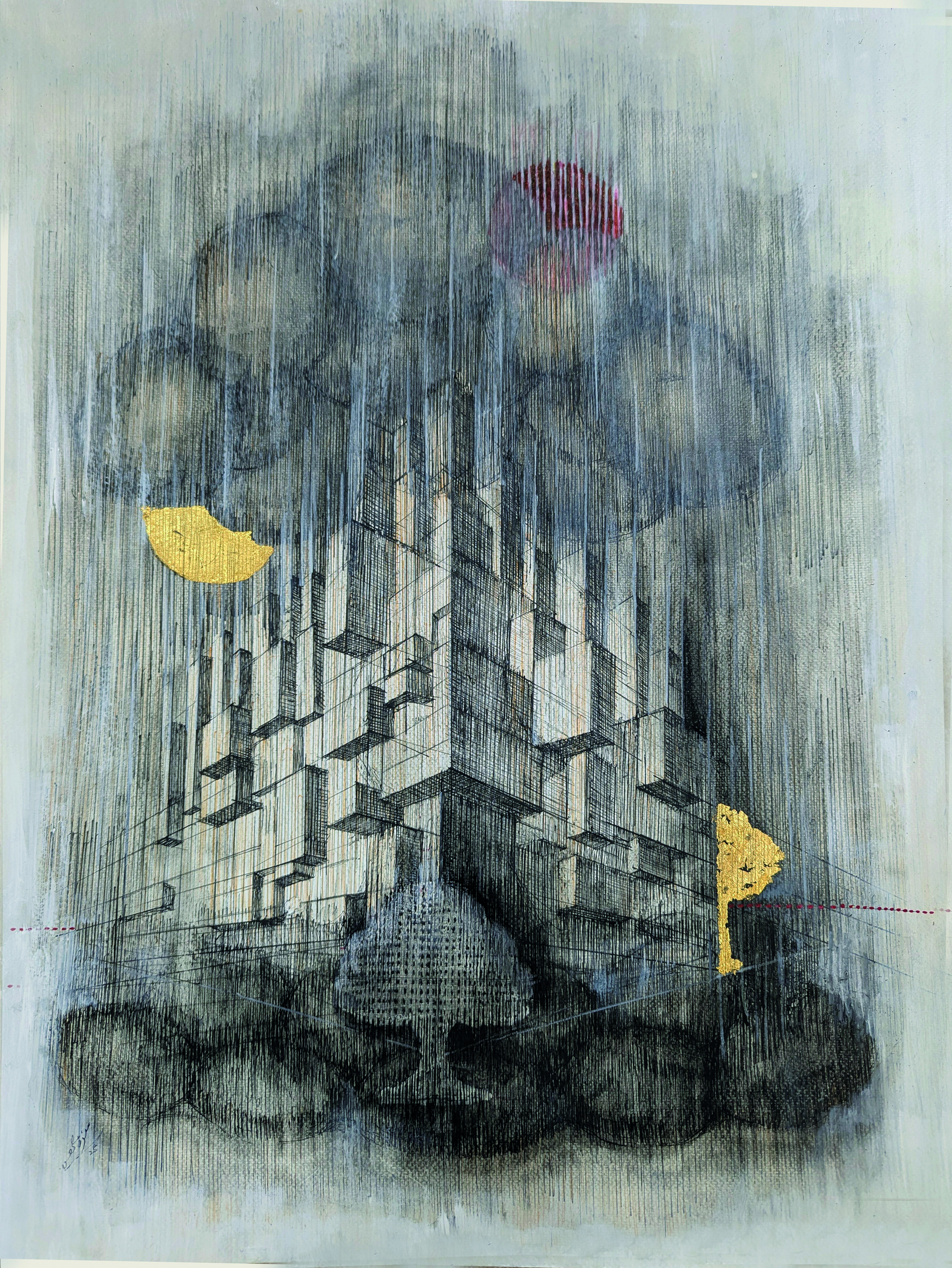
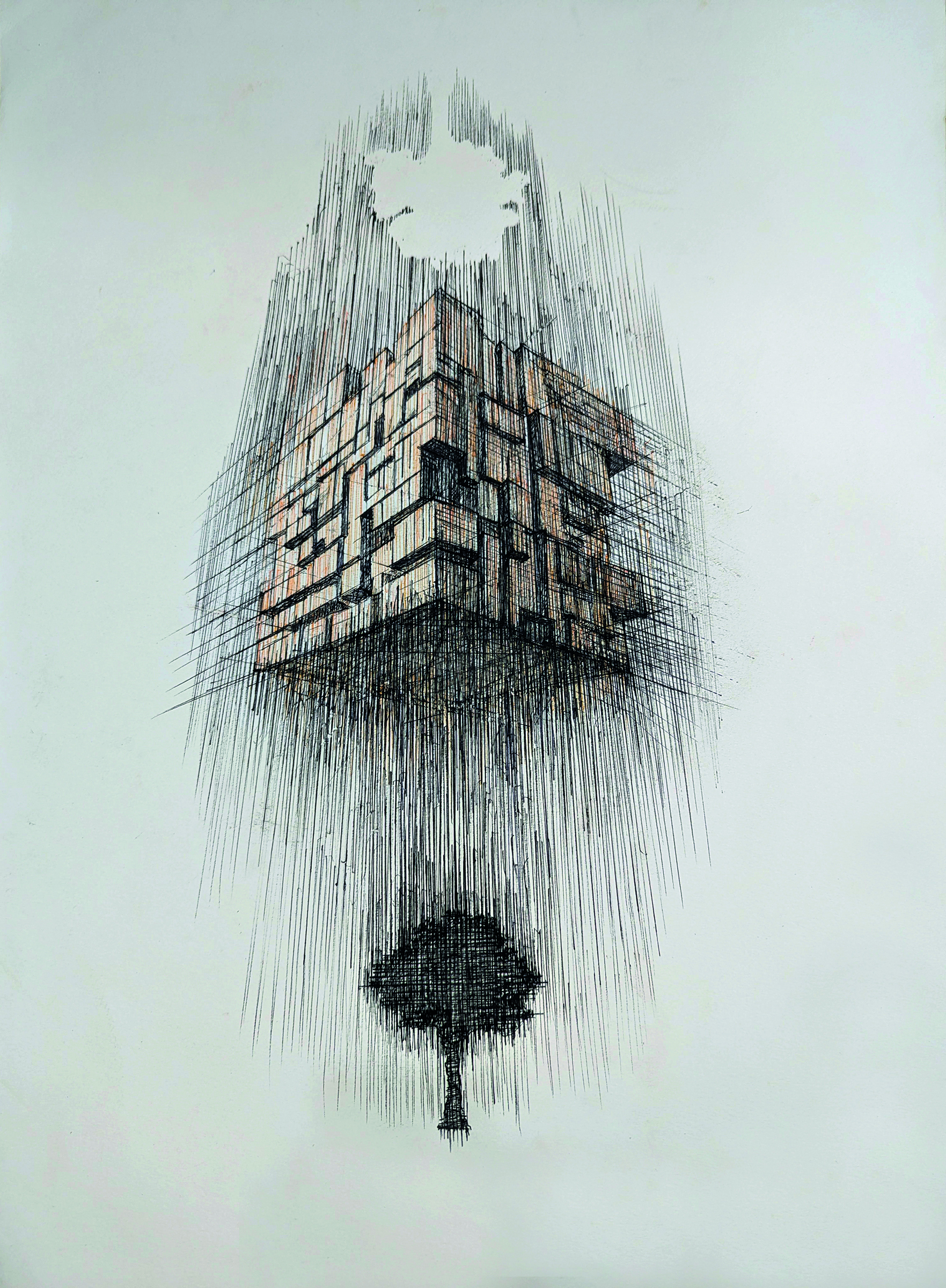
Drawing functions as a reflective and process-driven practice through which Munawar records fragments of landscape in retreat. Through layered lines and textured forms, the work traces the tension between urban intensity and desire for stillness. Rather than resolving this tension, the artist uses the act of making to examine how human experience is shaped by environmental transformation.
One of the pieces, titled, Solastalgia, done in pen and ink on archival paper depicts a tense interplay between architectural rigidity and organic fragmentation. The dense, hovering structure suggests urban pressure and containment, while the fractured forms below suggest erosion, memory, loss. The small bird forms at the bottom suggest vulnerability and transience – life persisting under the weight of urban expansion.
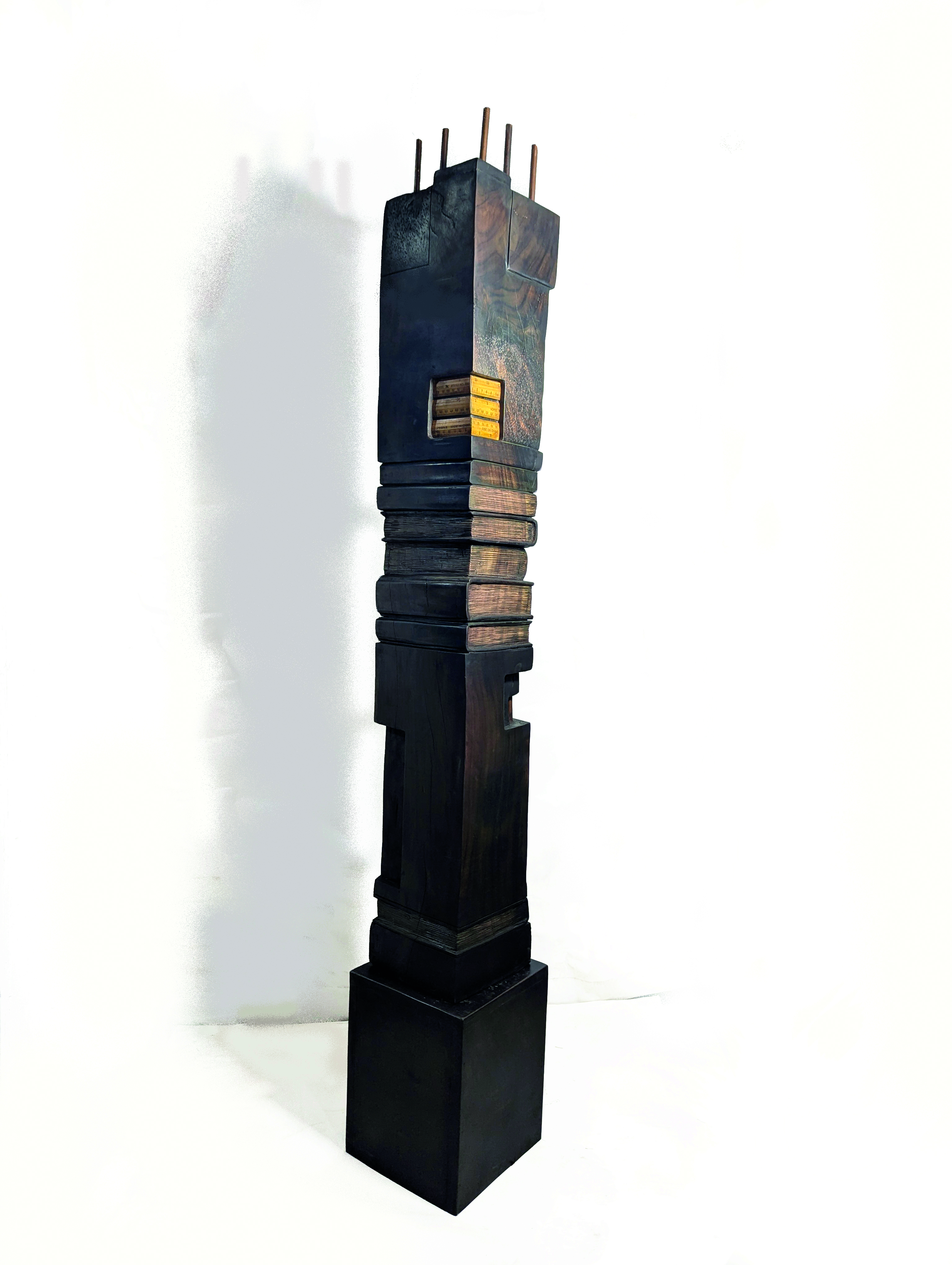
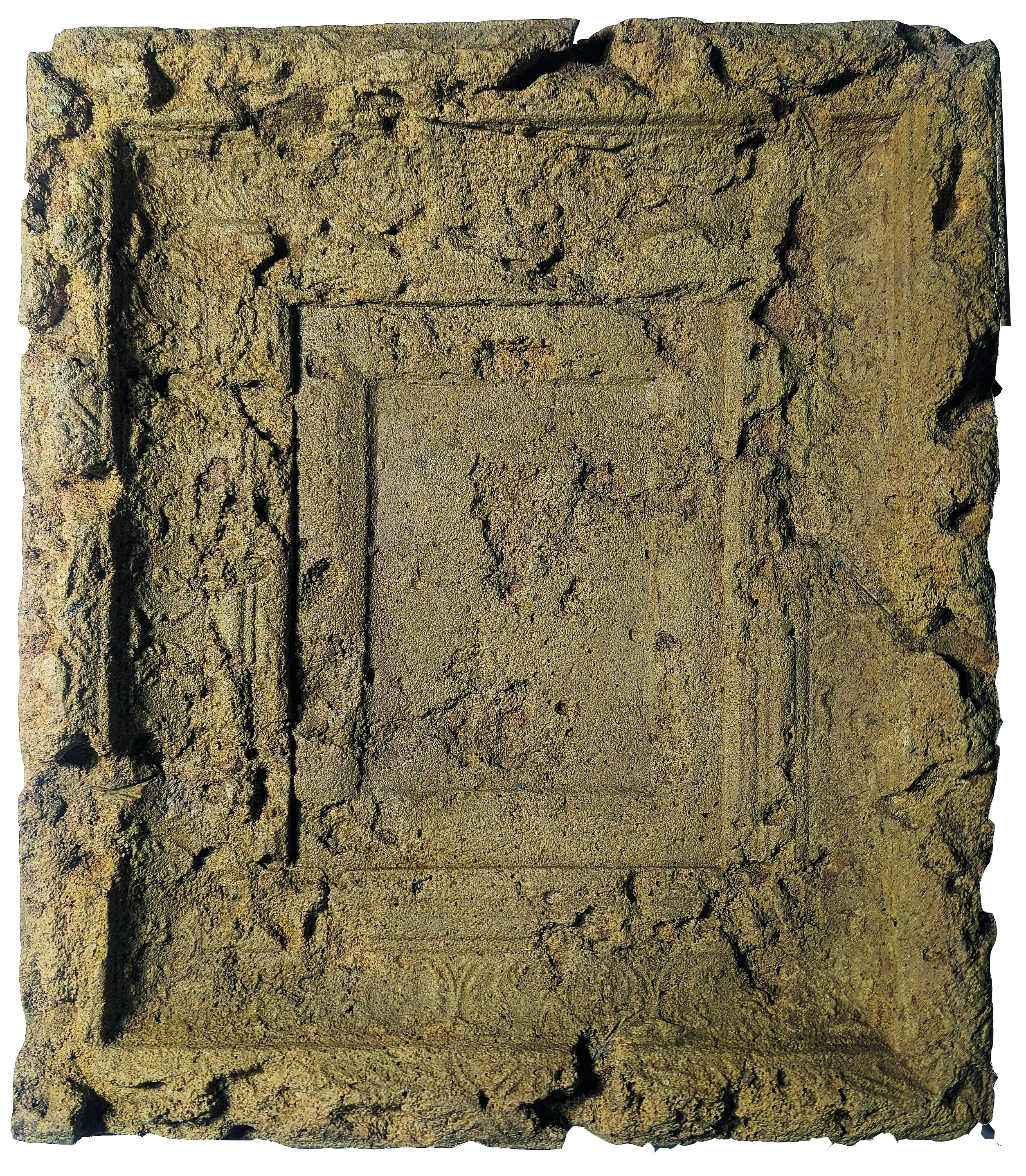
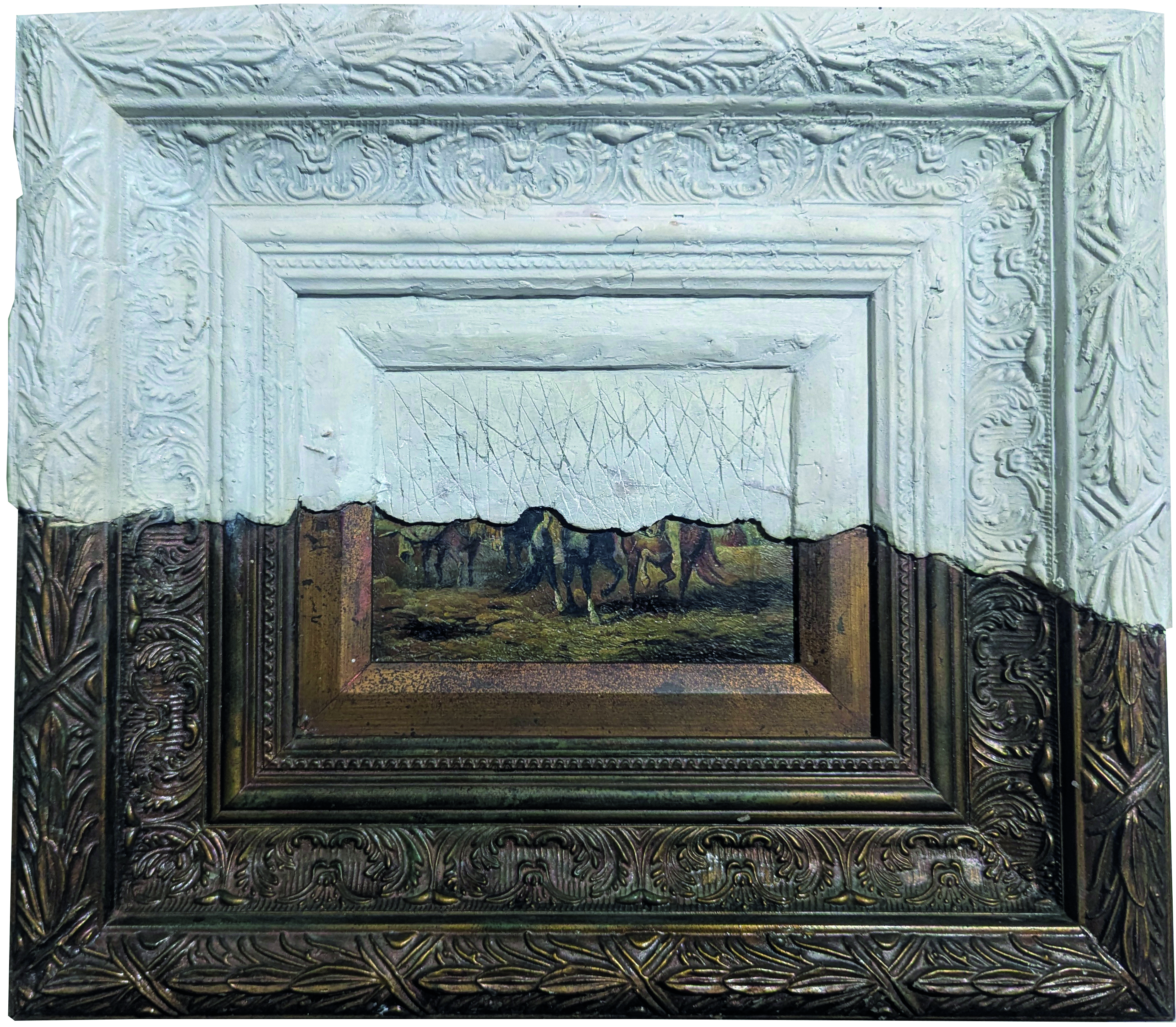
Another untitled piece, done in wood, white cement and plaster on acrylic on board acts as a dominant sculptural presence. Its excessive ornamentation and weight visually overwhelm the image it contains. The landscape within it seems fragile and distant, as if receding into the background. Much like the comparisons Munawar draws in his work about how urbanisation has impacted environmental change, causing so much to erode and be destroyed to make way for urban development.
Munawar’s work resists closure, holding loss, memory and endurance at the same. Through his art he effectively highlights how change can leave a place irrevocably transformed.
Pakistan Art Gallery