
Sarah Ahmad’s solo show at Koel Gallery in Karachi was curated by Naazish Ata-Ullah.
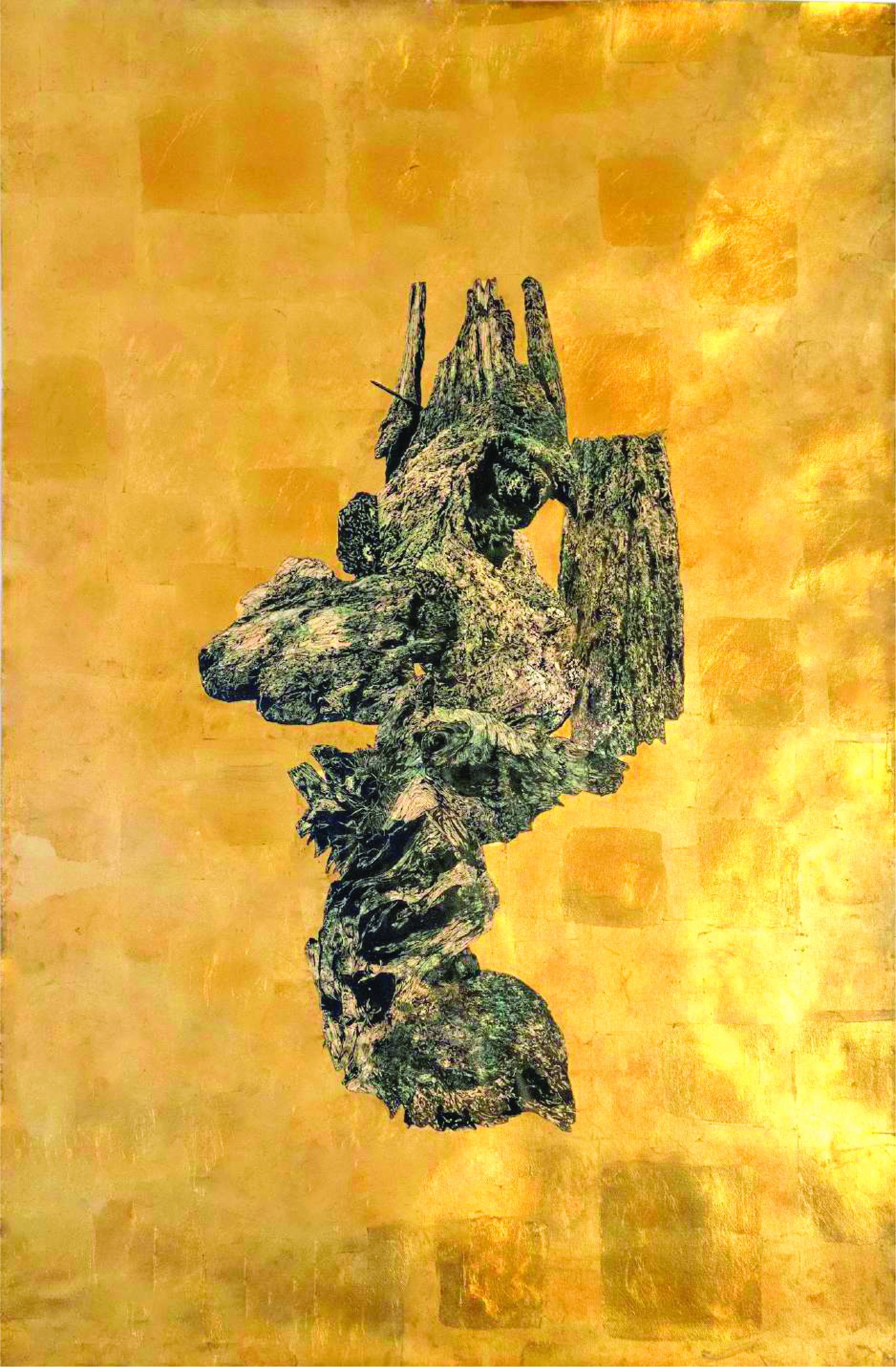
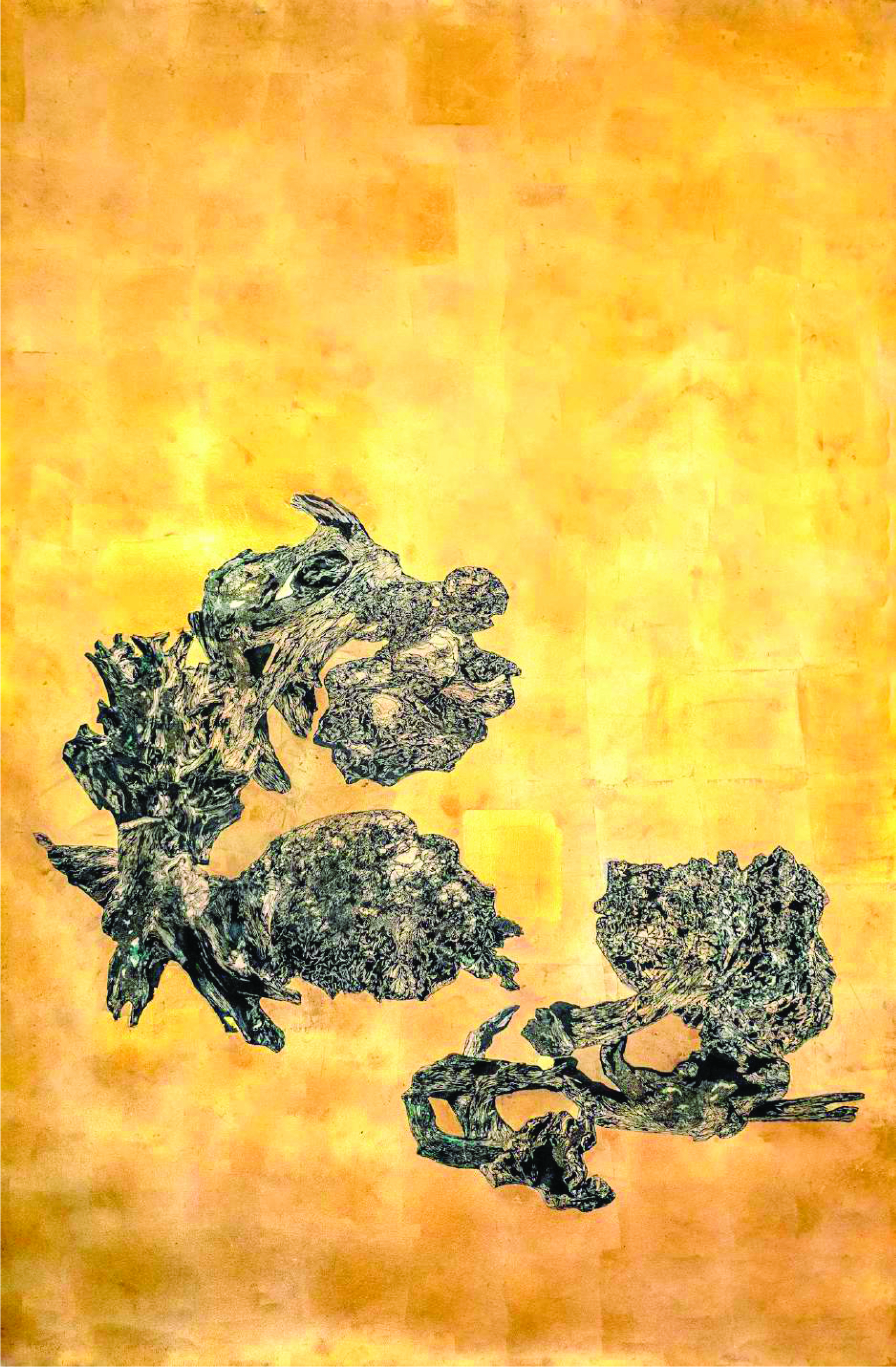
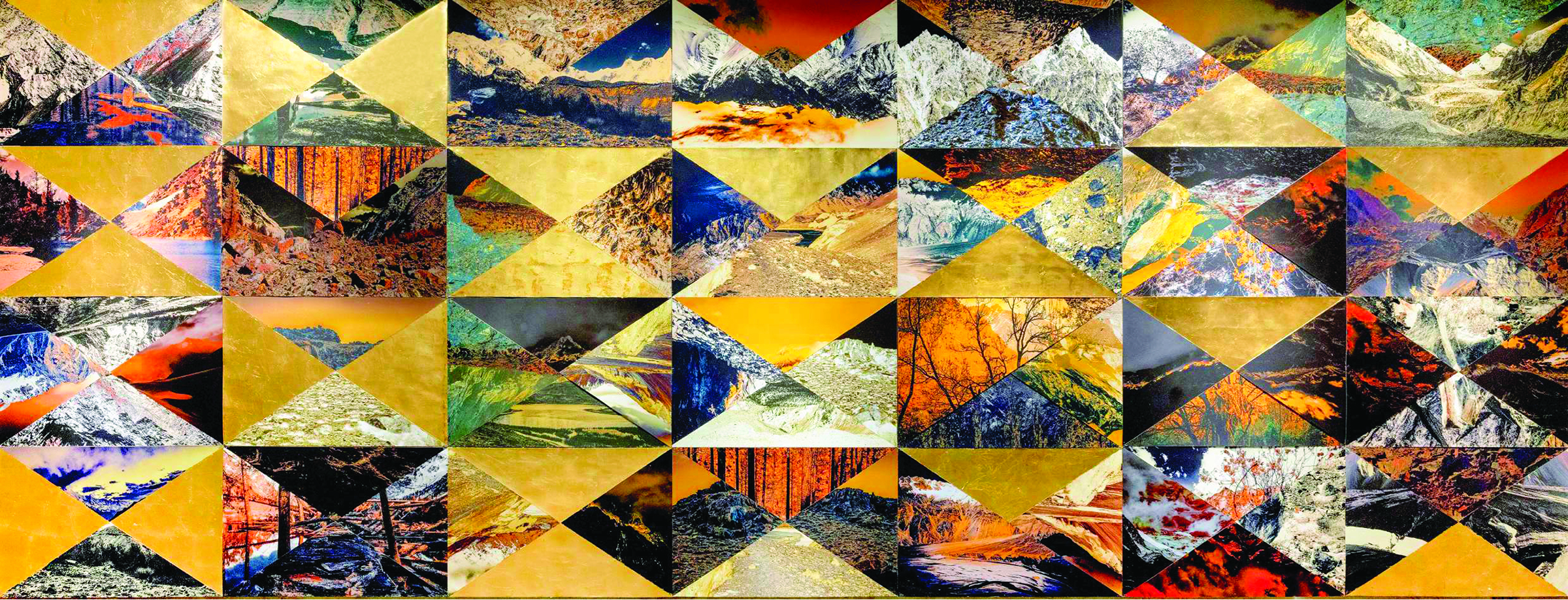
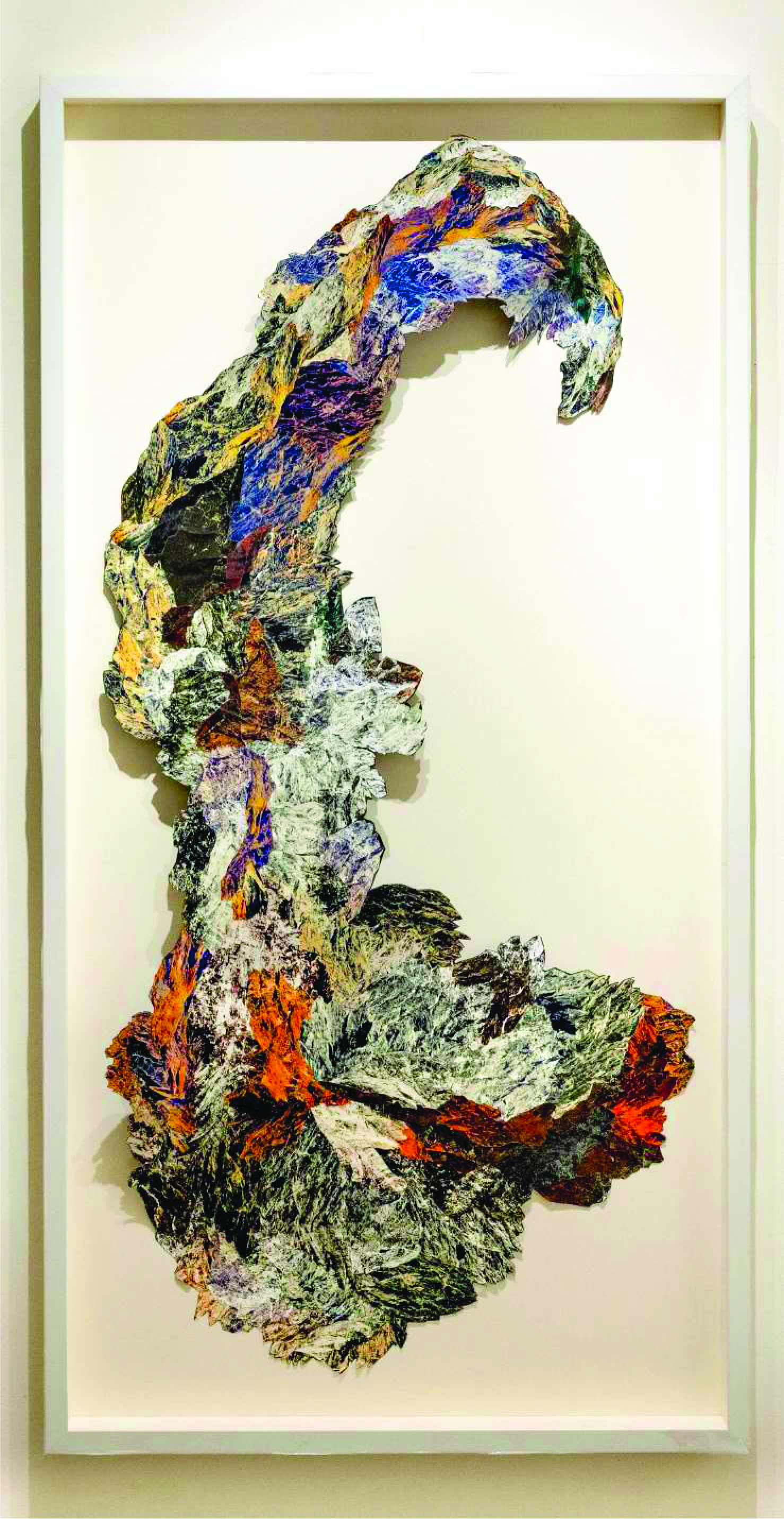
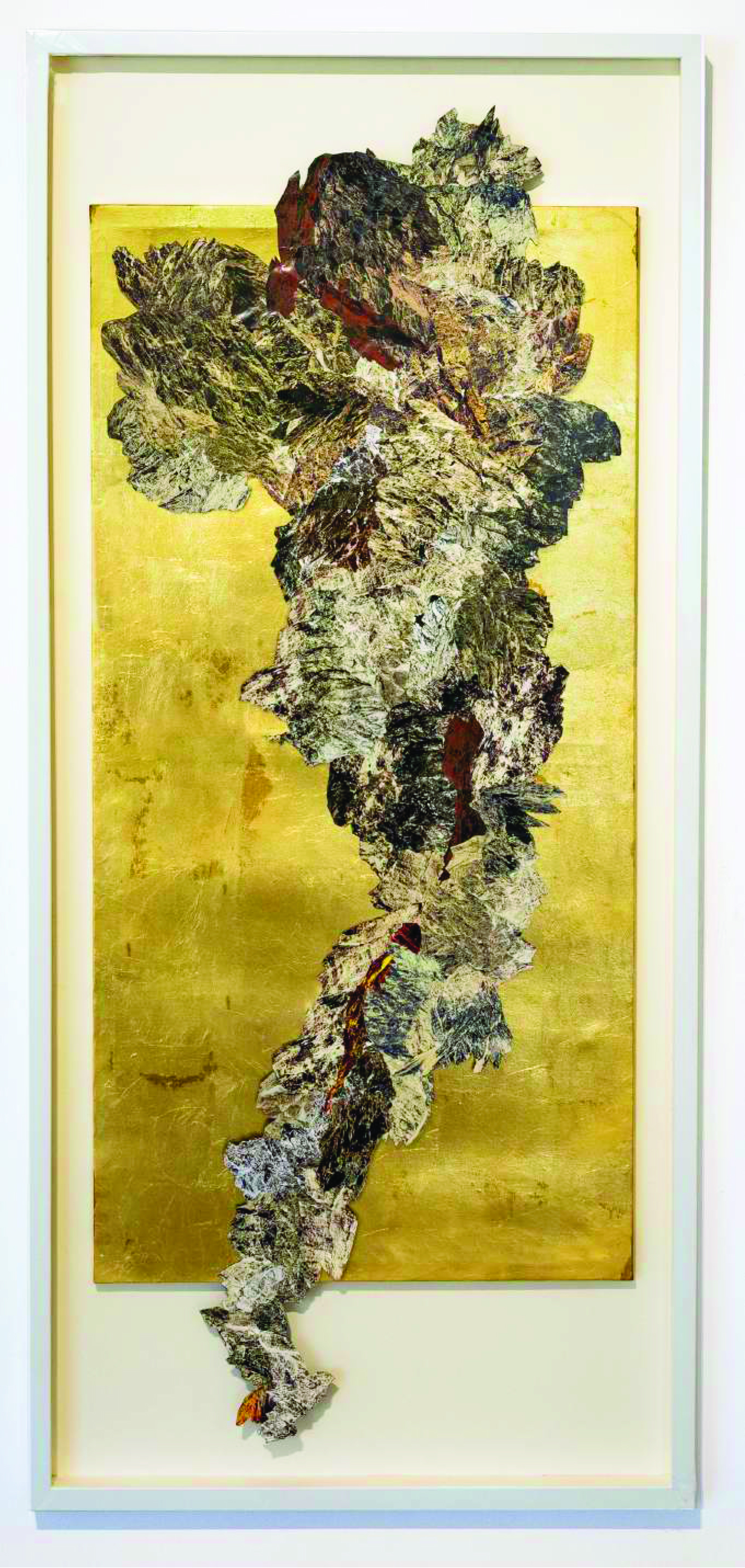
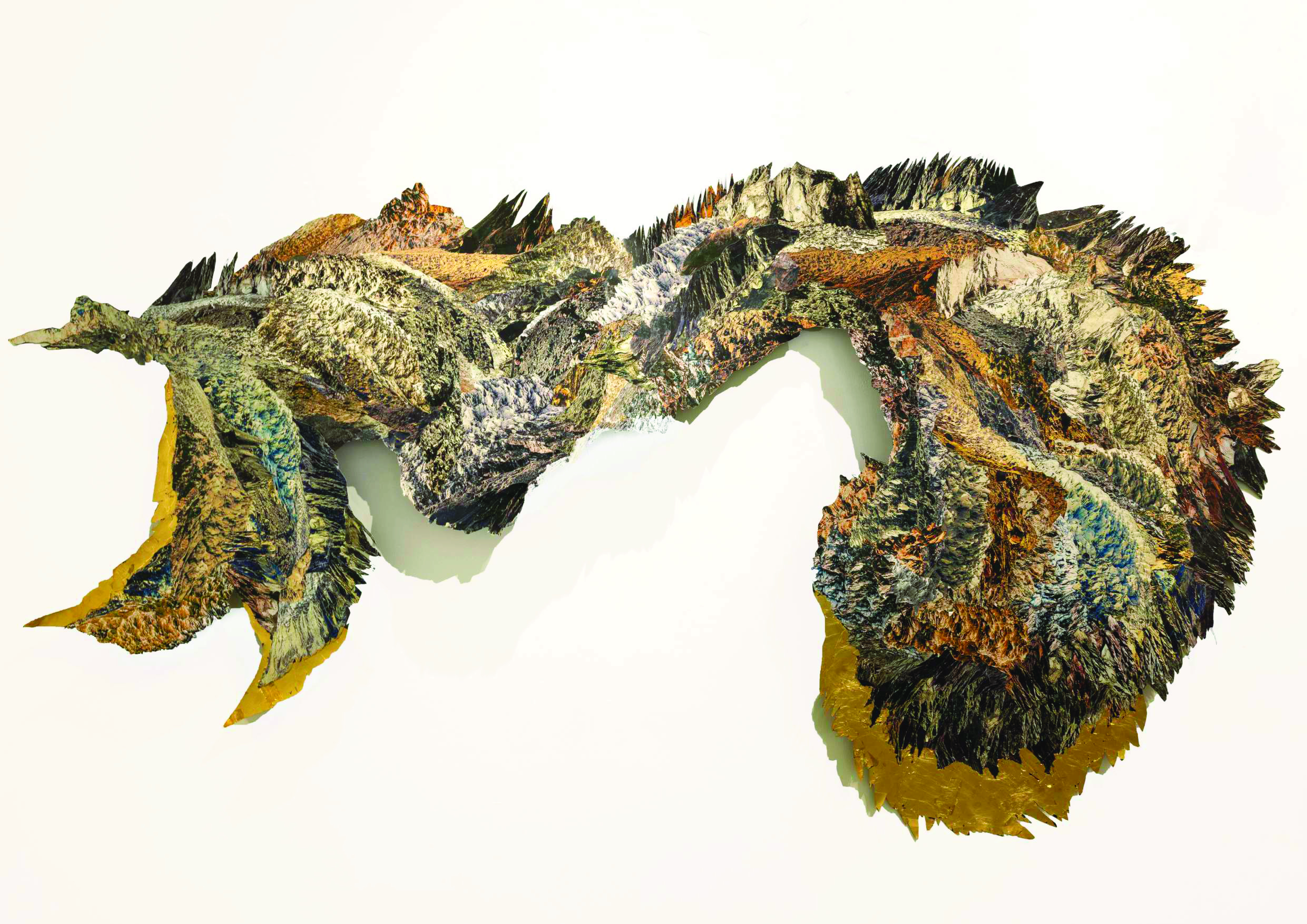
Naazish Ata-Ullah comments on the artist’s influence and journey, “In Sarah Ahmad’s work, vast landscapes are not simply recorded but transformed. Ahmad takes fragments of these environments, selecting, cutting, editing, moving them through stages of transmutation. The spine of this work is her own experience: taking fragments and piecing them together, pieces of trauma and displacement of a life not rooted in any one place. The cutting and piecing together of fragments mirrors this, a fragmented existence transformed into new structures. This is not detachment, but a journey. Rebuilding from wreckage. Ahmad’s research happens through direct experience of the landscape, walking, hiking, and being in nature. She witnesses both renewal and destruction, the healing power of the land alongside scars of extraction and displacement. The landscapes of Gilgit, of Oklahoma and New Mexico in the rural parts of the US, have been inspirational and even nurturing. This is a quietness to these places, something that finds expression in the fragments themselves. One senses the spiritual energy connecting us.”
Sarah Ahmad shares, “my practice centres displacement and belonging, our relationship with land, patter and transformation. Working with displaced materials, threatened landscapes, and patterns, both natural and human-made, I reveal the sacred geometries embedded within them. At the core of this work is transformation. Alchemy, from the Arabic word al-kimiya, refers to the transformation of base metals into gold, but also the purification of self through that process. My process follows alchemical stages: burning, cutting, dissolving, reassembling, gliding. The same material reforms into new configurations, the making as transformative personally as it is materially. The work is dynamic evolving into new stages in each space. This is the alchemy of becoming: transformation as ongoing practice, where hope lives – the same material holding futures not yet imagined.”
Sarah’ s practice positions transformation as both method and meaning. Through processes of alteration and reconfigurations, the work resists finality and remains open to continual becoming. The result is a living dialogue between land, memory and making.
Pakistan Art Gallery