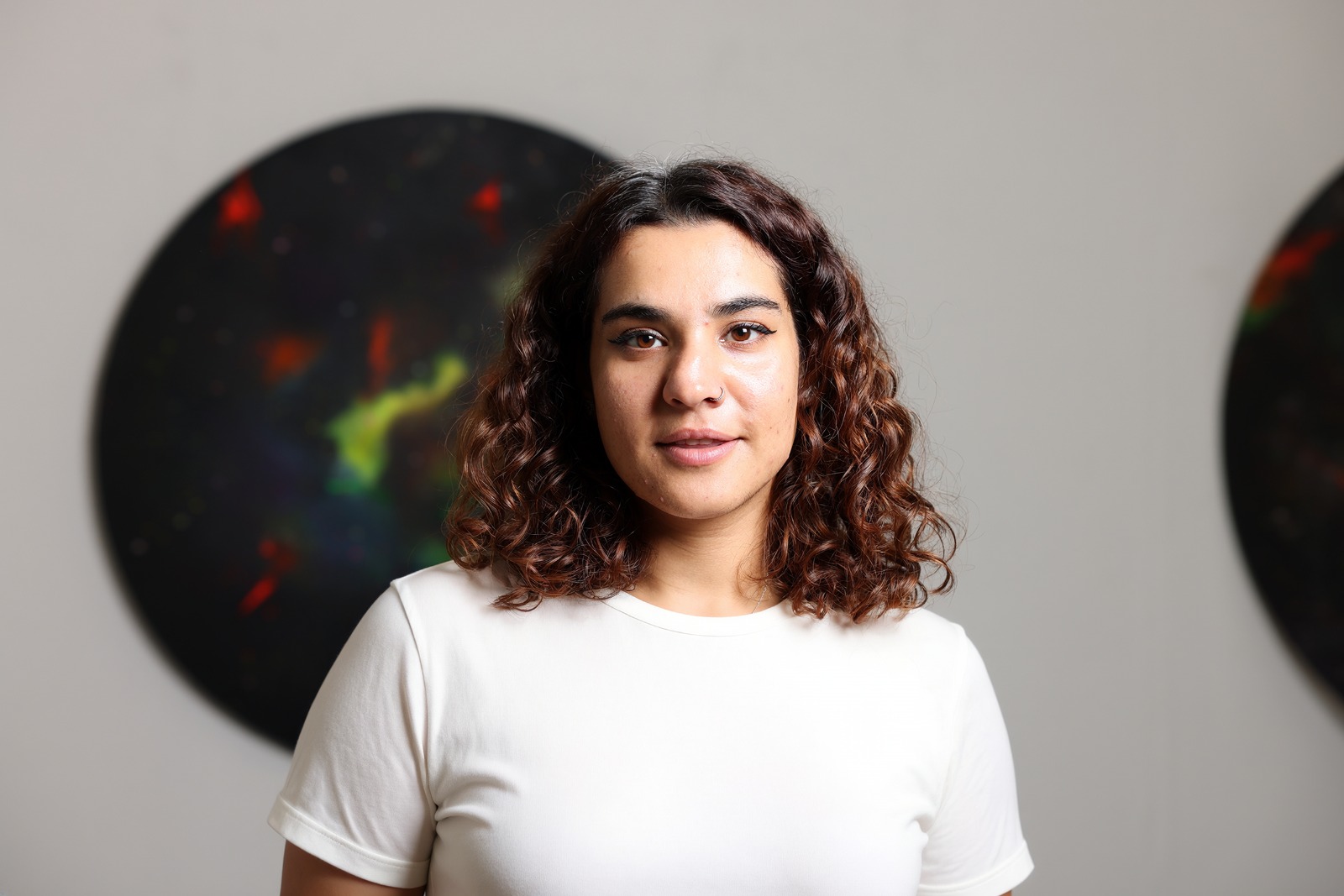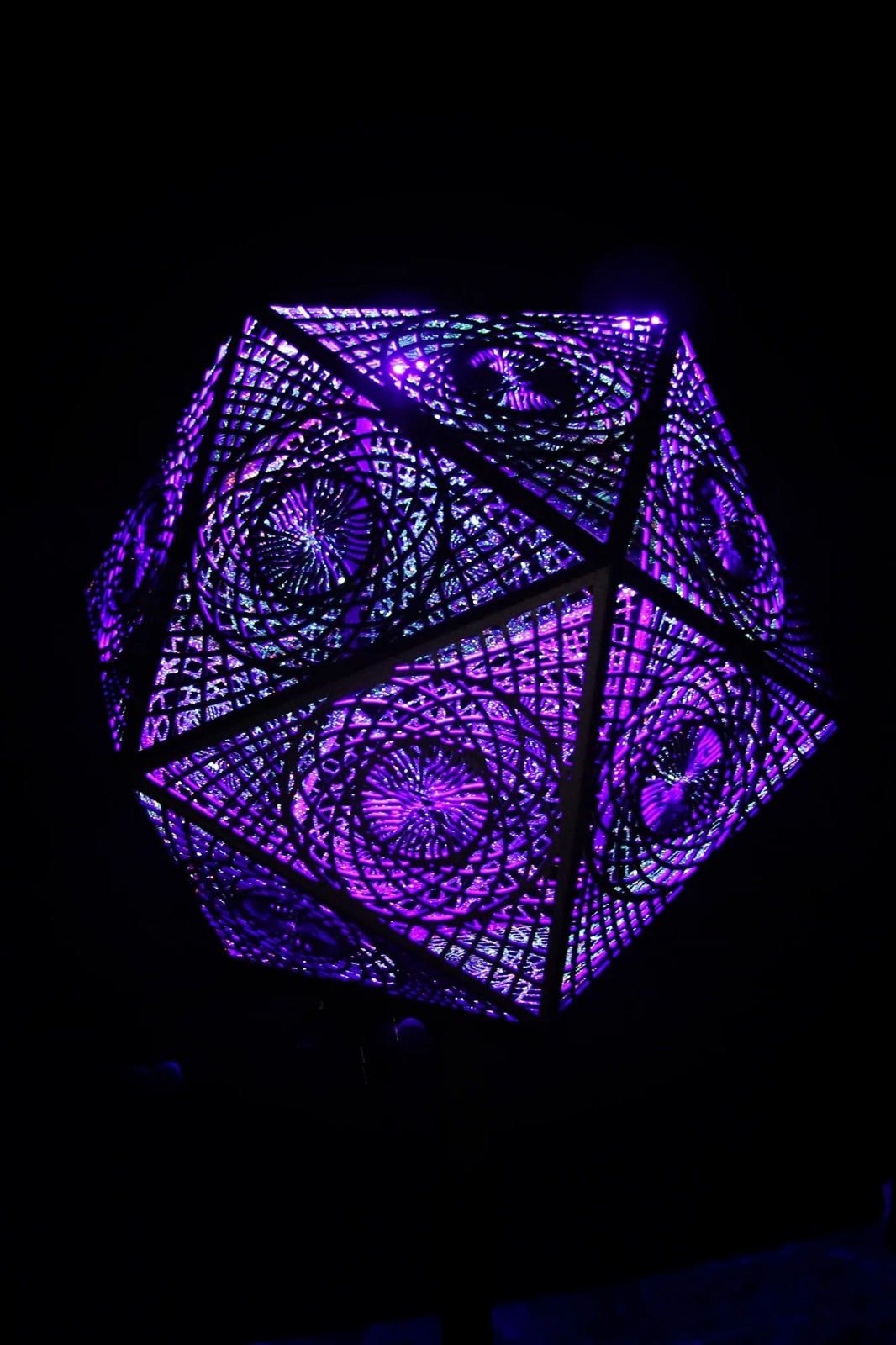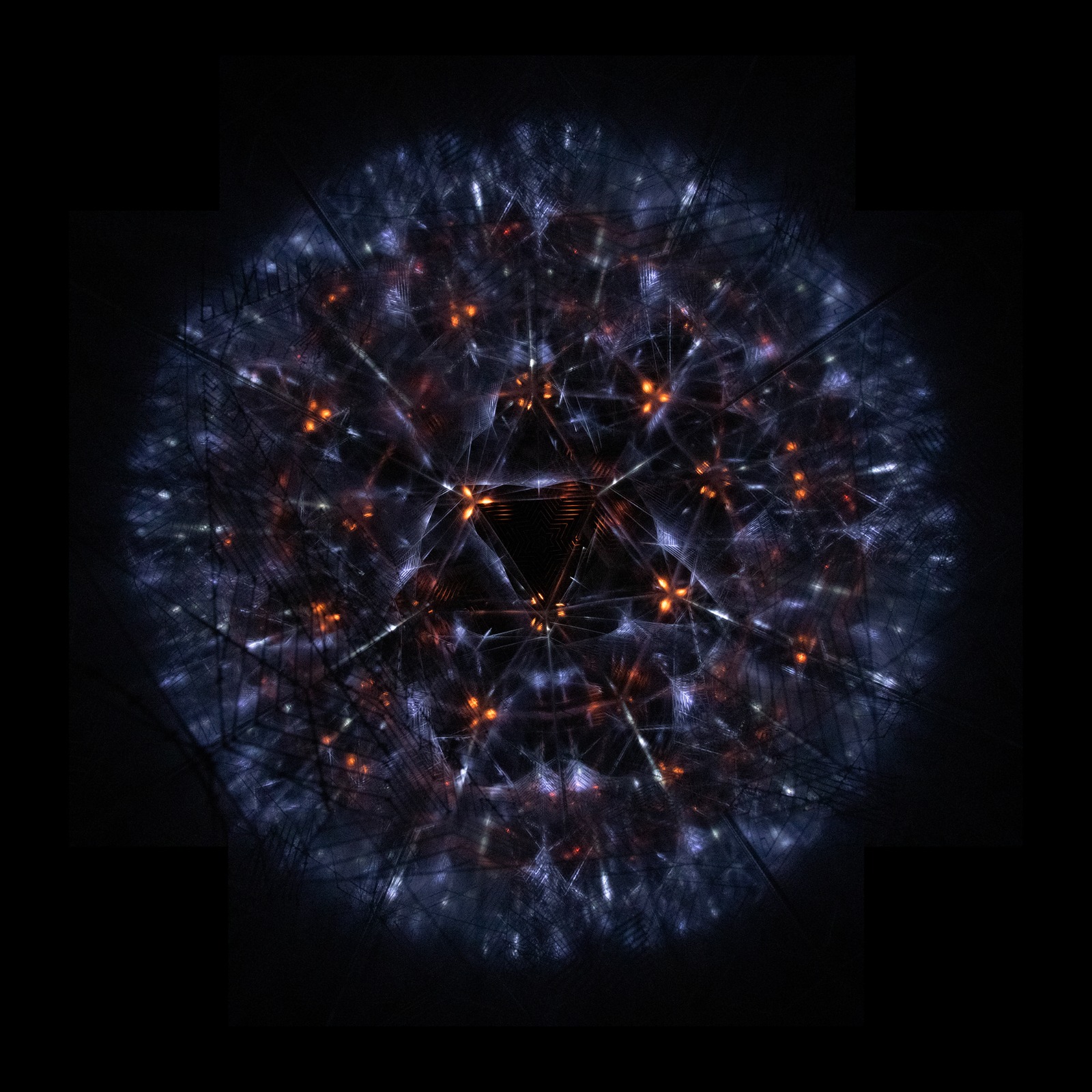

For Javeria Salar, light is more than a visual element; it is a medium through which form, colour and space acquire new meanings. A Birmingham-based artist and graduate of Pakistan’s National College of Arts (NCA), Salar has developed an artistic practice that moves from sculpture to fluorescent painting and digital installation. Throughout this evolution, one concern has remained central: how does light influence what we see, and how does our perception change when an artwork responds to its surroundings?
This question first took shape during her studies at NCA. Her distinction-winning graduating thesis investigated the psychological effects of light and movement within a sculptural environment. Rather than focusing exclusively on the physical structure of an object, Salar examined how its appearance and meaning could shift according to the conditions in which it was viewed. Light altered the character of form, while movement introduced a sense of change into the viewer’s experience. The work established an early foundation for an artistic inquiry that would continue to evolve beyond the boundaries of traditional sculpture.
Her subsequent experience in cinematic art direction and production design broadened this understanding. In cinema, visual environments are carefully constructed through the interplay of lighting, colour, texture and spatial arrangement. Every element contributes to the atmosphere of a scene and influences how it is perceived. Working within this field allowed Salar to explore the relationship between visual composition and emotional response, strengthening her interest in the ways light can transform an environment.
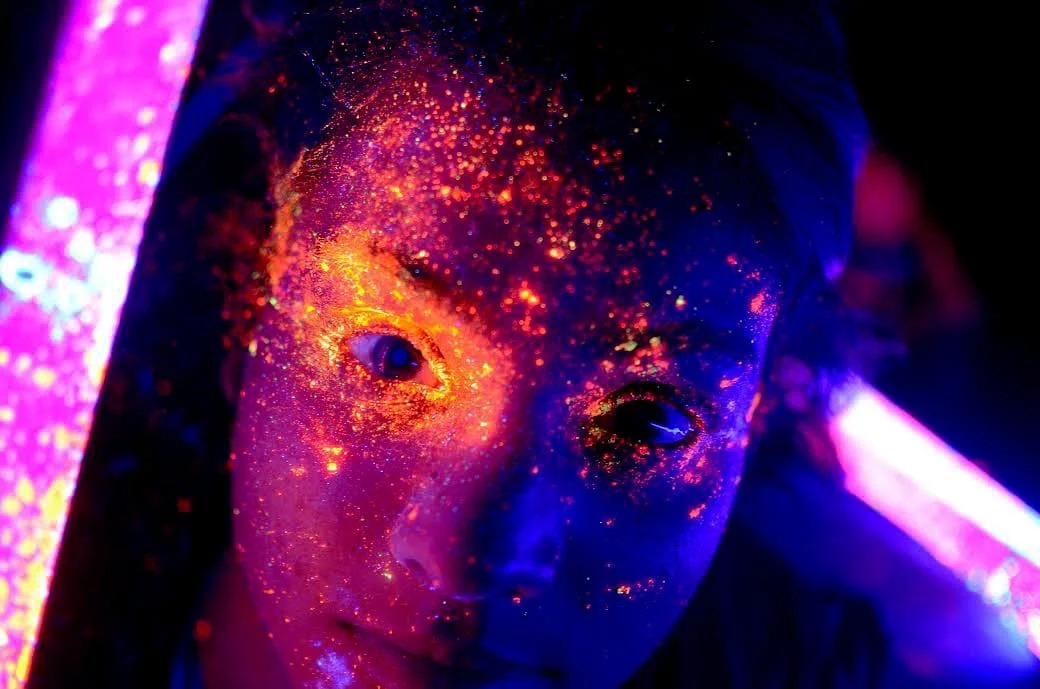
In 2023, she returned to academic study through the MA Fine Art programme at Birmingham City University. This period marked an important stage in her development, as she began experimenting with fluorescent paints, ultraviolet light and installation. These materials offered a departure from conventional painting, allowing colour to assume a more dynamic presence. Under ultraviolet illumination, fluorescent pigments appear to glow, creating a visual effect in which the painted image seems to extend beyond the physical surface. Darkness, in this context, becomes an essential part of the composition, intensifying the relationship between colour and illumination.
Her series Stellar Odyssey, comprising six fluorescent paintings, emerged from these investigations. Inspired by celestial phenomena, the works draw upon the visual language of galaxies, nebulae and the vastness of outer space. Fluorescent colour lends these cosmic subjects an unusual intensity, while the changing effects of illumination invite viewers to experience the paintings differently from conventional images.
The significance of the series lies not only in its astronomical references but also in the relationship it establishes between material and perception. The paintings depend upon specific lighting conditions to reveal their full visual potential. Colour becomes more than a property of pigment; it becomes part of an experience shaped by the interaction between the artwork, its environment and the viewer. In this way, Salar reconsiders painting as something that can change in appearance rather than remain a fixed visual statement.
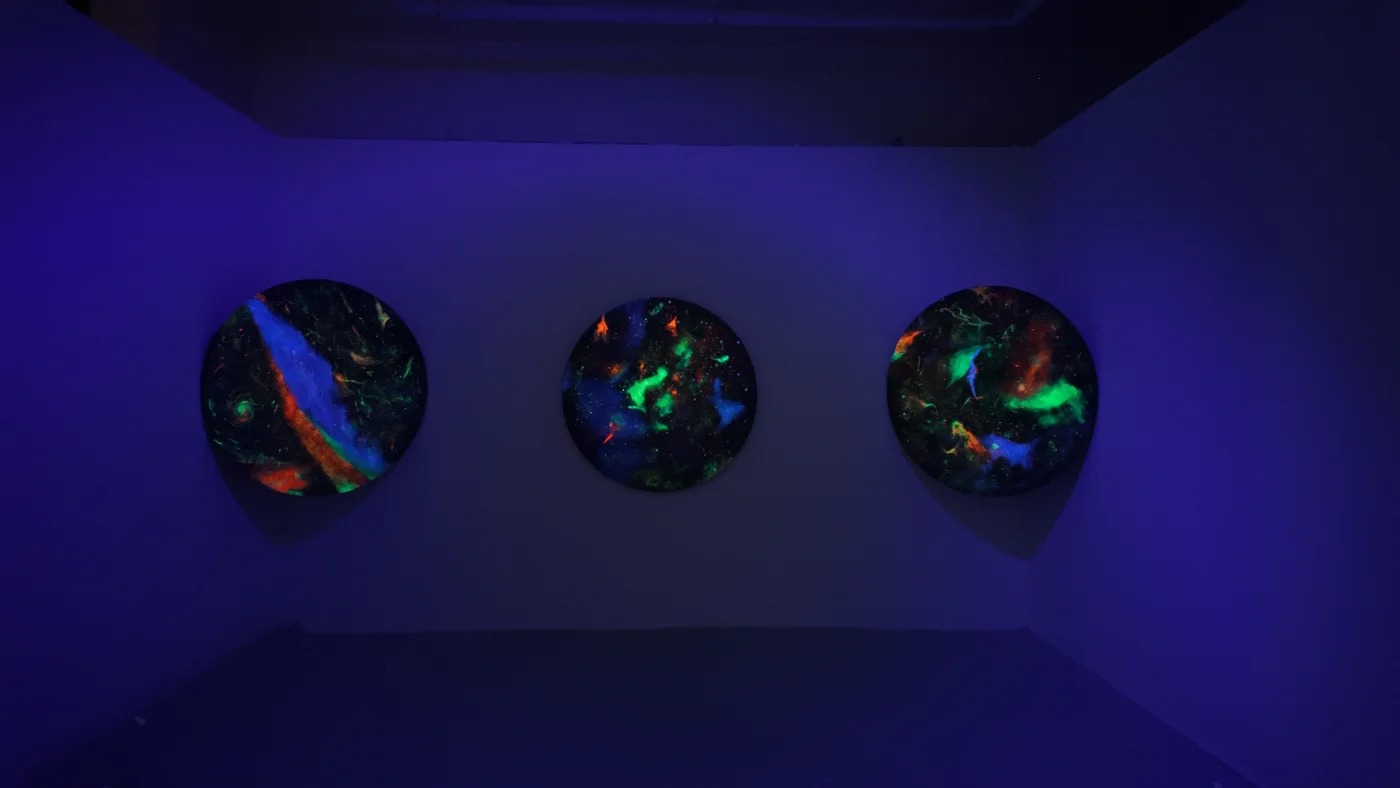
This exploration expanded further in Urban Star Fields (2025), an installation comprising three circular paintings: Cosmic Symphony, Celestial Messengers and Nebulae Visions. Each measures approximately 152 centimetres in diameter, and together they form the basis of an installation incorporating digital projection mapping.
The circular format recalls celestial bodies and cosmic formations, reinforcing the connection between the physical paintings and their astronomical imagery. However, the addition of projection introduces another dimension to the work. Images created through digital light interact with the painted surfaces, establishing a dialogue between material form and projected appearance. The paintings are no longer experienced solely as independent compositions; they become components of a larger visual environment.
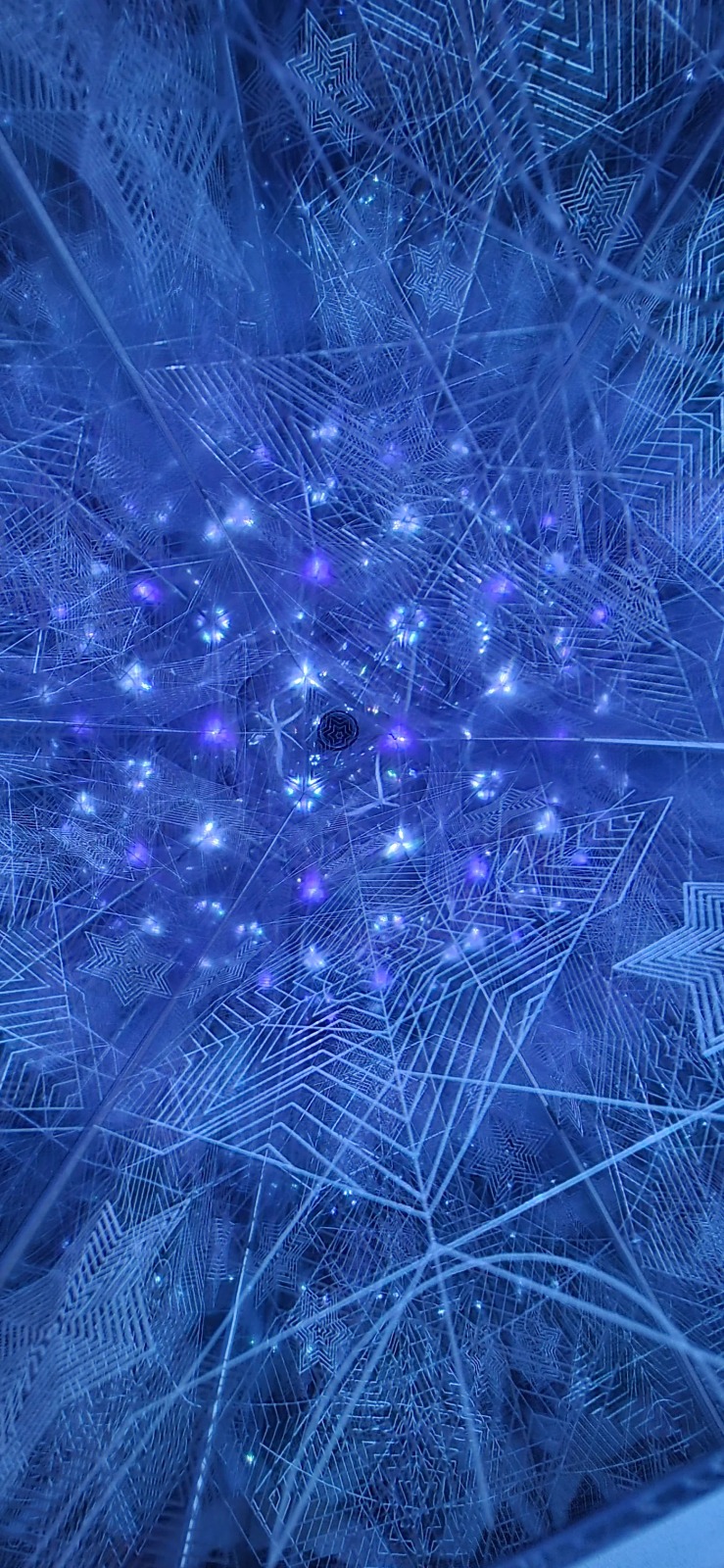
Such an approach requires considerable attention to the relationship between technology and artistic intention. Projection mapping involves the precise coordination of image, surface, scale and illumination. The projected material must complement the underlying composition while preserving the visual identity of the paintings. Rather than treating technology as an attraction in itself, Salar’s installation brings together different elements to explore how an image can occupy and transform space.
Her artistic development has been accompanied by an expanding exhibition presence in Britain. In June 2024, her work was presented in Linked at the Birmingham & Midland Institute. Later that year, she participated in Deviance & Difference, curated by Osman Yousefzada at Birmingham Museum & Art Gallery. In March 2025, her work Gaia’s Legation amidst the Cosmos was selected by Blue Metaphor for Stories of the Hearts Untamed in Bristol. Her selection for Autumn Salon 26 at London’s Candid Gallery marks another milestone in her exhibition journey.
Taken together, these presentations reflect a practice increasingly concerned with the possibilities of visual experience. Fluorescent pigments, ultraviolet illumination and digital projections can produce immediate visual impact, particularly when used to evoke the mystery of the cosmos. Yet the lasting interest of Salar’s work rests on the questions beneath these effects. How does colour change under different conditions? What happens when light becomes part of the artwork rather than simply illuminating it? How can an image extend beyond its surface and establish a relationship with the surrounding space?
These questions reveal the underlying continuity of her practice. The sculptural investigations begun at NCA were already concerned with the relationship between an object and the conditions through which it was perceived. Her recent paintings and installations extend that inquiry through new materials and technologies. The physical object remains important, but its appearance is no longer determined by form alone. Light, projection and spatial context become active participants in the experience of the work.
This development also demonstrates the importance of experimentation in Salar’s artistic process. Moving between sculpture, painting and installation has allowed her to investigate the limitations and possibilities of each medium. Rather than abandoning one form in favour of another, she has gradually expanded her visual vocabulary, bringing earlier concerns into new contexts. Her experience in production design further informs this approach, particularly in her attention to the arrangement of elements and the creation of a cohesive visual environment.
Ultimately, Salar’s work occupies the space between the material and the immaterial. Her paintings possess physical surfaces, yet their appearance can be transformed by light. Her installations employ tangible objects, yet projected images introduce a sense of movement and visual instability. Through this interplay, she encourages viewers to look beyond the immediate image and consider the circumstances that shape their perception.
From her early experiments with sculpture to her explorations of fluorescent painting and projection mapping, Javeria Salar has pursued a consistent artistic question through an evolving range of methods. Light has become the connecting element across these investigations: a force that alters colour, redefines form and transforms space. In her practice, seeing is not simply an act of observation, but an experience that changes with the conditions in which it takes place.
Review Gallery